
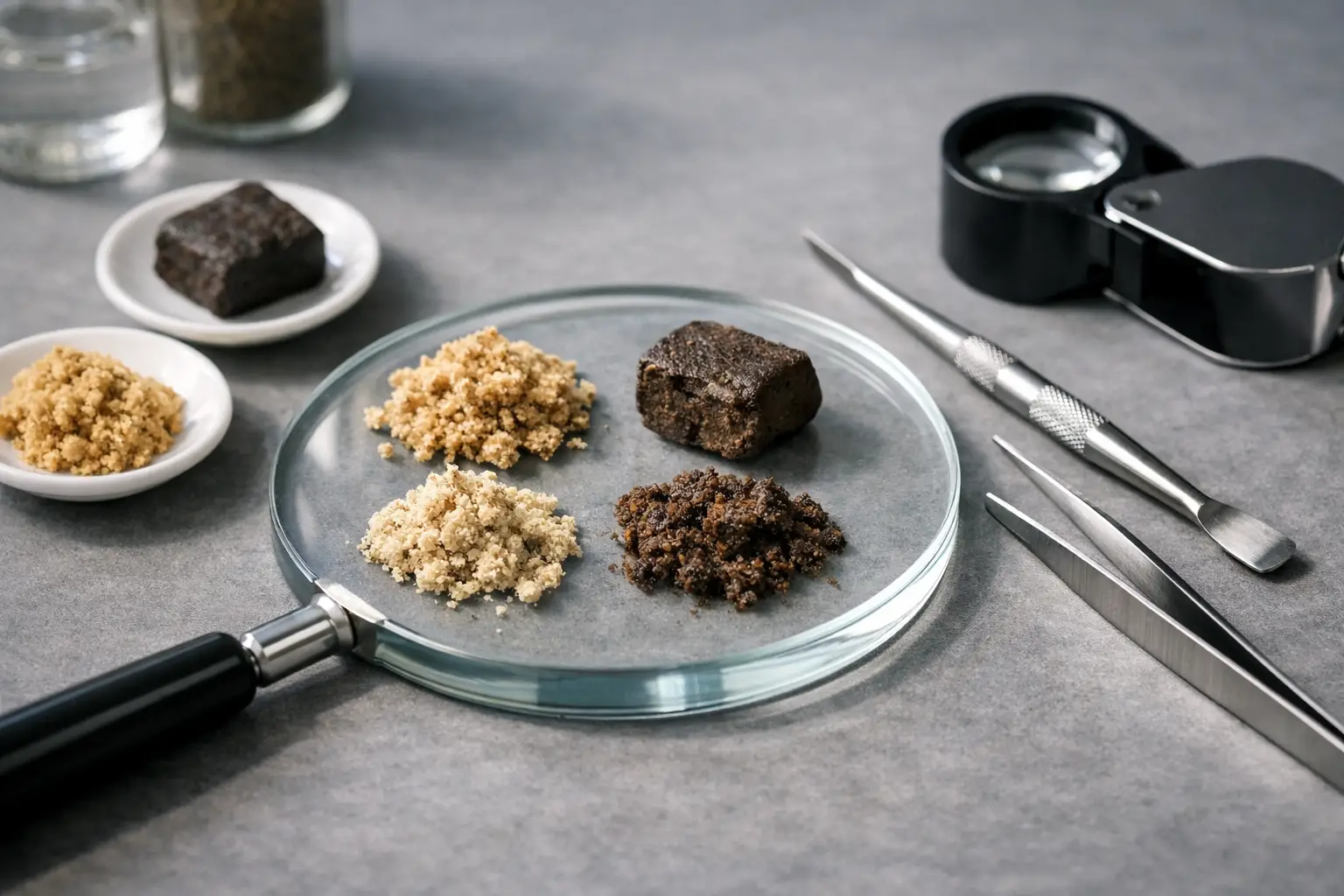
If two hashes look similar in a photo but one smokes clean, releases loud terpenes, and leaves almost no residue while the other feels flat and greasy, texture is usually the tell. Knowing how to compare hash textures gives you a fast way to separate premium, authentic product from average material before you commit to a larger buy.
For anyone shopping premium hashish online, texture is not a minor detail. It reflects how the resin was collected, how much plant contamination made it through, how the product was cured, and how well it was stored after production. For connoisseurs, texture is part of the quality check. For newer buyers, it is one of the easiest ways to avoid disappointment.
Why texture matters more than most buyers think
Texture is a surface clue for what is happening underneath. When hash is made from high-quality trichomes and handled with care, the final consistency usually lines up with better aroma, cleaner melt, and a more expressive effect profile. That does not mean one single texture is always best. It means the texture should make sense for the category.
A soft, greasy, terpene-rich static sift can be excellent. A sandy dry sift can also be excellent. A firm hash egg with a dense outer shell may be exactly what you want if it breaks open to a rich, oily interior. The point is not chasing one feel. The point is matching texture to type, freshness, and expected performance.
That is where many buyers go wrong. They assume sticky means stronger, dry means old, or soft means premium. Sometimes that is true. Often it is not. Good comparison starts with context.
How to compare hash textures the right way
The fastest way to compare hash textures is to judge four things together: appearance, touch, response to warmth, and how it handles when broken apart. Looking at one factor in isolation leads to bad reads.
Start with the visual structure
Look closely at the outer surface first. Premium hash can range from matte and sandy to glossy and slightly oily, depending on the style. What you want to see is consistency. If the outside is unnaturally shiny, overly wet-looking, or has random hard clumps mixed with dusty material, that can suggest poor handling or uneven composition.
Dry sift and semi dry styles often show a more granular, crumbly structure. That is normal when the resin heads remain relatively intact and the product has not been overworked. La mousse hash tends to look more uniform and pliable, often with a lighter, softer body. Frozen sift and premium frozen hash can show a cleaner, more refined visual texture, especially when made from top-tier starting material with better trichome separation.
If a product claims to be premium solventless hash but looks flat, compressed, and lifeless with no visible resin character, that is worth questioning.
Then judge the feel in your fingers
Touch tells you what the photo cannot. A quality hash should respond in a way that fits its category. Some types should crumble easily. Others should press and warm into a more pliable mass. A premium resin-rich product may soften quickly between the fingers and release aroma almost immediately.
What you do not want is a texture that feels suspiciously chalky, gummy in a fake way, or greasy without depth. Chalkiness can point to excess contaminants or low resin content. A strange rubbery feel can suggest overprocessing or additives. A greasy exterior with no real aromatic payoff can mean the product looks richer than it actually is.
There is always some variation by batch, cultivar, and storage conditions, so avoid absolute rules. The goal is to feel whether the hash seems alive, resinous, and true to type.
Watch how it reacts to a little warmth
One of the best checks is how hash changes with gentle heat from your fingers. Premium solventless resin tends to wake up. The texture loosens, the aroma opens, and the material becomes easier to shape or spread, depending on the style. That response often signals preserved terpene content and proper resin maturity.
If the product stays dead and dusty with almost no aromatic lift, it may be overly dry or simply lower grade. If it turns slick too fast and smears like oil without structure, that can mean it has been poorly stored or is carrying a texture that does not match its supposed category.
This is especially useful when comparing frozen sift hash, static sift hash, and semi dry products. Those categories can overlap visually, but warmth often reveals which one has cleaner resin content and better terpene preservation.
Comparing popular hash textures by category
Different categories naturally lean toward different textures, and buyers should compare within those lanes instead of across completely different formats.
Dry sift and semi dry hash
Dry sift usually presents a more crumbly, sandy, or lightly compressible texture. Better grades feel clean rather than dusty. Semi dry often lands between loose sift and more compact hash, offering some crumble with a bit more body. In both cases, the best examples break apart cleanly and release a clear, resin-forward aroma.
If either one feels harsh, powdery, or full of inert material, the trichome quality may be lacking. A premium version should still feel active, not stale.
Static sift and frozen sift hash
These styles often aim higher on refinement. Static sift can feel silkier, richer, and more resin-dense because of the cleaner trichome separation. Frozen sift hash may show a delicate, terpene-heavy texture that changes quickly with warmth. These categories often reward buyers who pay attention to subtle differences in softness, melt potential, and aromatic release.
When these products are truly top-tier, the texture usually signals purity before you even light anything. They should feel intentional, not random.
La mousse and more pliable commercial styles
La mousse hash is known for a softer, aerated, approachable texture. That softness can appeal to buyers who want easy handling and a smooth, workable consistency. But softness alone does not equal premium quality. You still want aroma, even color, and a natural resin feel.
A well-made pliable hash should not feel artificially whipped or strangely uniform in a way that strips out character. There is a difference between smooth and overworked.
Hash eggs and pressed formats
Hash eggs and other pressed styles add another layer because the outer shell and inner core may differ. The exterior can feel firmer from curing and compression, while the inside may be darker, softer, and more terpene-rich. That contrast is not a flaw. Often, it is part of the appeal.
What matters is whether the interior still feels clean and resin-heavy rather than muddy or contaminated. Pressed formats should show density with life, not dead weight.
Red flags when comparing textures
Some warning signs deserve more attention than others. If hash feels overly dry and produces almost no aroma when handled, quality may be low or storage may have been poor. If it is excessively oily on the outside but weak in scent, that can be cosmetic richness without real depth. If it crumbles into dust with no cohesion, resin content may be underwhelming.
Another red flag is mismatch. If a product is marketed as premium frozen hash but feels coarse, flat, and lifeless, something is off. If a supposedly clean solventless option leaves behind a dirty, plant-heavy impression when broken up, texture is already telling you the story.
That is why experienced buyers compare claims to physical cues. Marketing can say premium all day. Texture has to back it up.
Texture, melt, and smoking performance
Texture does not guarantee melt quality, but it often points in the right direction. Hash with cleaner trichome content and better terpene preservation usually handles better, smells stronger, and burns cleaner. That can mean smoother hits, richer flavor, and less residue.
Still, this is where nuance matters. Some firmer or drier styles can smoke beautifully, especially if they were made with traditional methods and stored correctly. Some very soft hashes can be terpene-rich but less convenient to handle. It depends on what you value most – easy prep, full melt behavior, bold flavor, or classic body and relaxation.
For many buyers, the best move is choosing the texture that matches the experience they want rather than chasing hype around one specific format.
Buying online? Use texture as a filter, not the only test
When you cannot inspect hash in person, texture descriptions become even more important. Product photos, category names, and wording around softness, crumble, resin richness, and solventless handling all help you read what you are getting. Trusted retailers that focus on premium concentrate categories usually give stronger clues because they understand the difference between generic hash and connoisseur-grade product.
If you are browsing a specialist catalog like Blue Magic Patron, compare texture language across products instead of reading one listing in isolation. Notice whether a product is positioned as sandy, creamy, pliable, refined, or dense. Those signals help you match your preference to the right style, especially if you are choosing between dry sift, static sift, frozen hash, or a pressed format.
The strongest buyers are not just chasing potency numbers. They are reading texture as proof of process, freshness, and authenticity.
Once you start comparing hash this way, product selection gets much easier. Texture stops being a vague detail and becomes one of the clearest signs that the resin in front of you is worth your time.

