
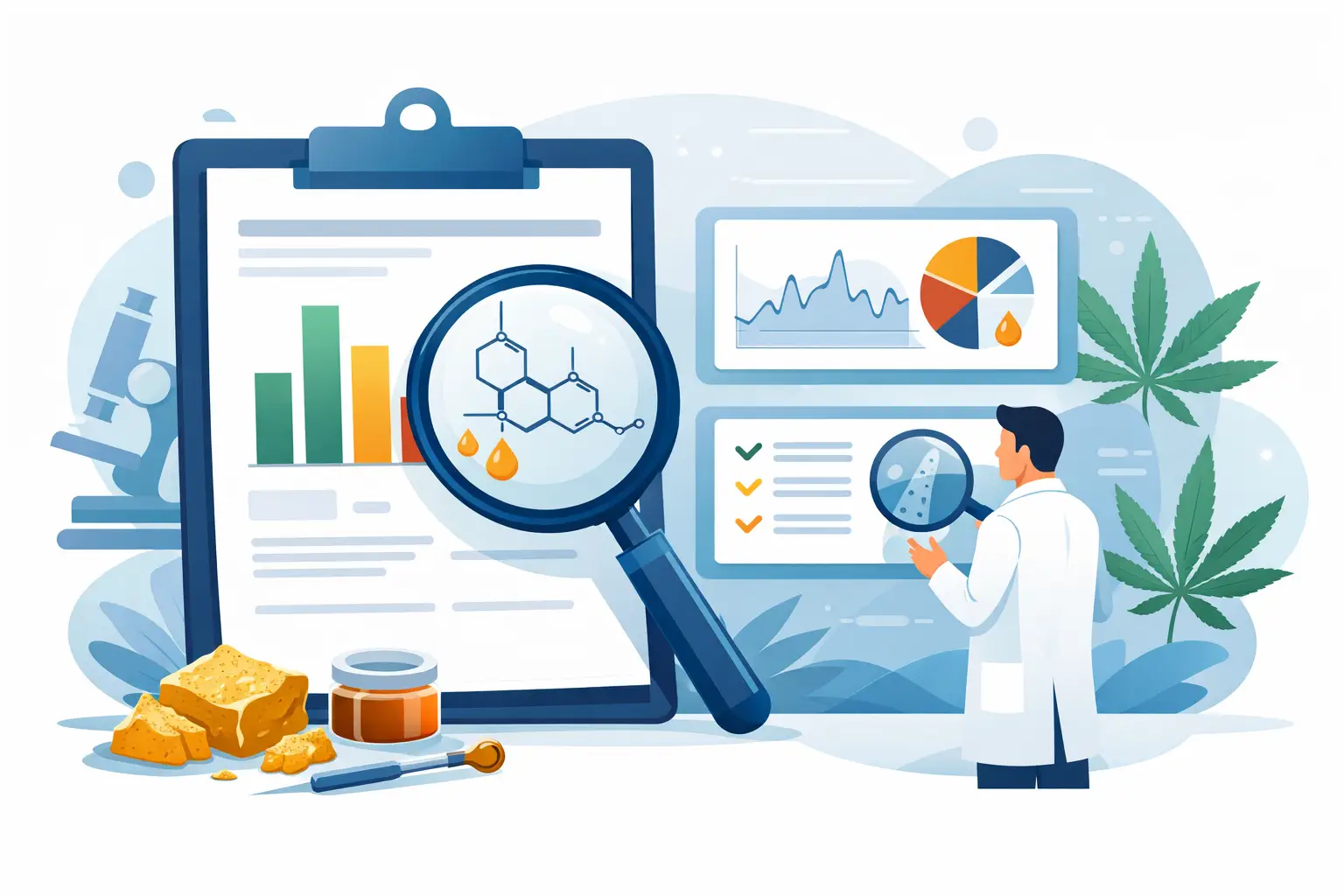
A premium hash jar can look, smell, and feel top-tier, but the lab report is where the real story shows up. If you want to know how to read hash lab results, you need more than a quick glance at THC. The best buyers check the full profile – cannabinoids, terpenes, moisture, and contaminant screening – because that is what separates authentic solventless quality from average product dressed up with bold claims.
For serious hash buyers, this matters. A clean, flavorful, potent batch should not have to hide behind vague marketing. Lab results give you proof of potency, purity, and consistency, and once you know what to look for, it gets much easier to spot premium hash worth your money.
Why hash lab results matter
Hash is not flower, and it should not be judged like flower. With premium dry sift, static sift, semi dry, la mousse, or frozen hash, concentration changes the way the numbers look. Potency is usually higher, terpene expression can be much richer, and contamination matters even more because concentrates magnify both the good and the bad.
That is why a proper certificate of analysis, often called a COA, matters so much. It gives you batch-specific data instead of generic promises. If a seller talks about top-shelf quality, authentic solventless production, and clean effects, the lab report should back it up.
How to read hash lab results without getting fooled
Start with the basics. Most hash lab reports are split into sections. You will usually see sample identification, cannabinoid potency, terpene content, and safety screening. Some reports are clean and easy to read. Others bury key data under technical labels. Either way, the same core rules apply.
The first thing to check is whether the report matches the product in front of you. The batch number, product name, and test date should make sense. If the product says premium frozen sift hash but the report is old, generic, or tied to a different item, that is a red flag.
Freshness matters too. Hash does not stay frozen in time. Cannabinoids and terpenes shift with storage, heat, oxygen, and age. An older report is not automatically worthless, but it tells you less about what is in the product right now.
Read the cannabinoid section first
This is where most buyers jump straight to THC percentage, and that is fine – as long as you do not stop there. In hash, you may see several lines: THCA, THC, CBDA, CBD, CBG, and sometimes minor cannabinoids like CBC or CBN.
For traditional solventless hash, THCA is often the big number before heating. That is normal. THCA is the acidic precursor that converts into THC when you smoke, vape, or heat the product. So if a report shows high THCA and lower delta-9 THC, that does not mean the hash is weak. It usually means the lab is reporting the raw form accurately.
Some labs also show total THC. This number is useful because it estimates the amount of THC available after decarboxylation. If you are comparing products, total THC is often more helpful than looking at THC alone.
Still, potency should be read with context. A hash that tests a little lower on THC but carries a rich terpene profile can easily deliver a more satisfying experience than a harsher product with bigger numbers. Premium buyers know this already: potency sells, but flavor, effect, and smoothness keep people coming back.
Know what the percentages really mean
If you are new to concentrates, the numbers can look extreme. Hash often tests far higher than flower because it is a concentrated trichome product. That does not automatically make every high-testing sample premium. It just means more of the plant material has been refined away.
Also, there is no single magic number that defines quality. Different hash styles test differently. Dry sift, static sift, and semi dry products can vary based on cultivar, sift grade, technique, and how much plant contamination remains. A lower number on paper can still reflect excellent resin quality if the terpene preservation and cleanliness are there.
Terpenes tell you more than hype does
If the cannabinoid section tells you strength, the terpene section tells you personality. This is one of the most overlooked parts of learning how to read hash lab results, especially for buyers chasing authentic flavor and full-spectrum effects.
Terpenes are aromatic compounds that shape smell, taste, and often the feel of the experience. A strong terpene profile usually signals better resin preservation, especially in premium frozen or carefully handled solventless hash. When terpenes are low, flat, or missing from the report, that can mean the product is old, poorly stored, overprocessed, or simply not especially high-end.
Look for both total terpene percentage and the actual terpene breakdown. Common names include myrcene, limonene, caryophyllene, linalool, and pinene. A citrus-heavy profile may point to a brighter, more uplifting expression, while earthier or gassy combinations can suggest deeper body effects and richer flavor. It depends on the cultivar and your own tolerance, but the terpene section gives you a more complete picture than THC alone ever will.
A premium hash product should not just hit hard. It should taste alive.
Contaminant screening is where trust gets earned
This section is non-negotiable. Premium claims mean very little if a product is not screened for contaminants. For hash, that includes pesticides, heavy metals, residual solvents, microbial contamination, and sometimes foreign matter.
Residual solvent testing may seem less critical for solventless hash, but it is still worth checking when a report includes it. If a product is marketed as solventless, the cleanest outcome is what you want to see. Pesticide and microbial screening matter even more because concentrated products can carry concentrated problems.
The best result in these sections is usually listed as pass, not detected, or below action limits. You may also see abbreviations like ND for not detected. That is what you want. If the report is missing safety data entirely, or if the seller only shows potency and hides the rest, be cautious.
Moisture, water activity, and appearance data
Some hash reports include moisture content or water activity. These numbers are not always present, but they can be useful. Too much moisture can create storage issues, affect texture, and raise microbial concerns. Too little can mean a dry, brittle product that has lost some of its aromatic punch.
This is especially relevant for styles where texture is part of the appeal, like semi dry or la mousse hash. A report will not tell you everything about feel and workability, but moisture-related data can support what the product claims to be.
Red flags buyers should catch fast
A flashy storefront can make weak product look elite, so the lab report needs to hold up under pressure. If you are comparing options, watch for reports with no batch number, no test date, no terpene data, or no contaminant screening. Those gaps matter.
Another red flag is a report that only highlights one impressive number. If the marketing screams extreme potency but the report hides everything else, that is not premium transparency. It is selective selling.
You should also be skeptical of numbers that look too perfect across every batch. Real hash is an agricultural product. Even top-tier resin shows some variation from lot to lot. Consistency is good. Identical results every time can feel manufactured.
How to compare two hash products using lab results
If you are choosing between two options, do not ask only which one has higher THC. Ask which one shows the strongest overall quality markers. A better buy is often the product with a solid total THC range, strong terpene preservation, recent testing, and clean safety results.
For example, one hash might test higher in total THC but show weak terpene content and limited safety data. Another might come in slightly lower on potency but offer a fuller terpene profile, cleaner screening, and a fresher batch date. For most connoisseur buyers, the second product is often the smarter pickup.
That is the difference between shopping by headline and shopping by proof.
Reading hash lab results as a smart online buyer
Buying hash online means you do not always get to inspect the product in person first. That makes lab literacy even more valuable. A strong report helps you judge whether the product is likely to deliver on potency, flavor, cleanliness, and authenticity before you commit.
At Blue Magic Patron, the premium standard is built around exactly those markers – lab-tested potency, terpene preservation, solventless quality, and clean concentrate selection that speaks to both experienced smokers and newer buyers who want verified product instead of empty hype.
The more you read reports, the faster this gets. You stop chasing random big numbers and start looking for the profile that fits your preferences. Some buyers want heavy relaxation and rich, earthy resin. Others want brighter flavor, cleaner melt, or a more balanced high. Lab results do not replace experience, but they make your buying decisions sharper.
A great hash report should leave you feeling informed, not sold to. When the numbers line up with the product story, that is when premium starts to mean something real.

