
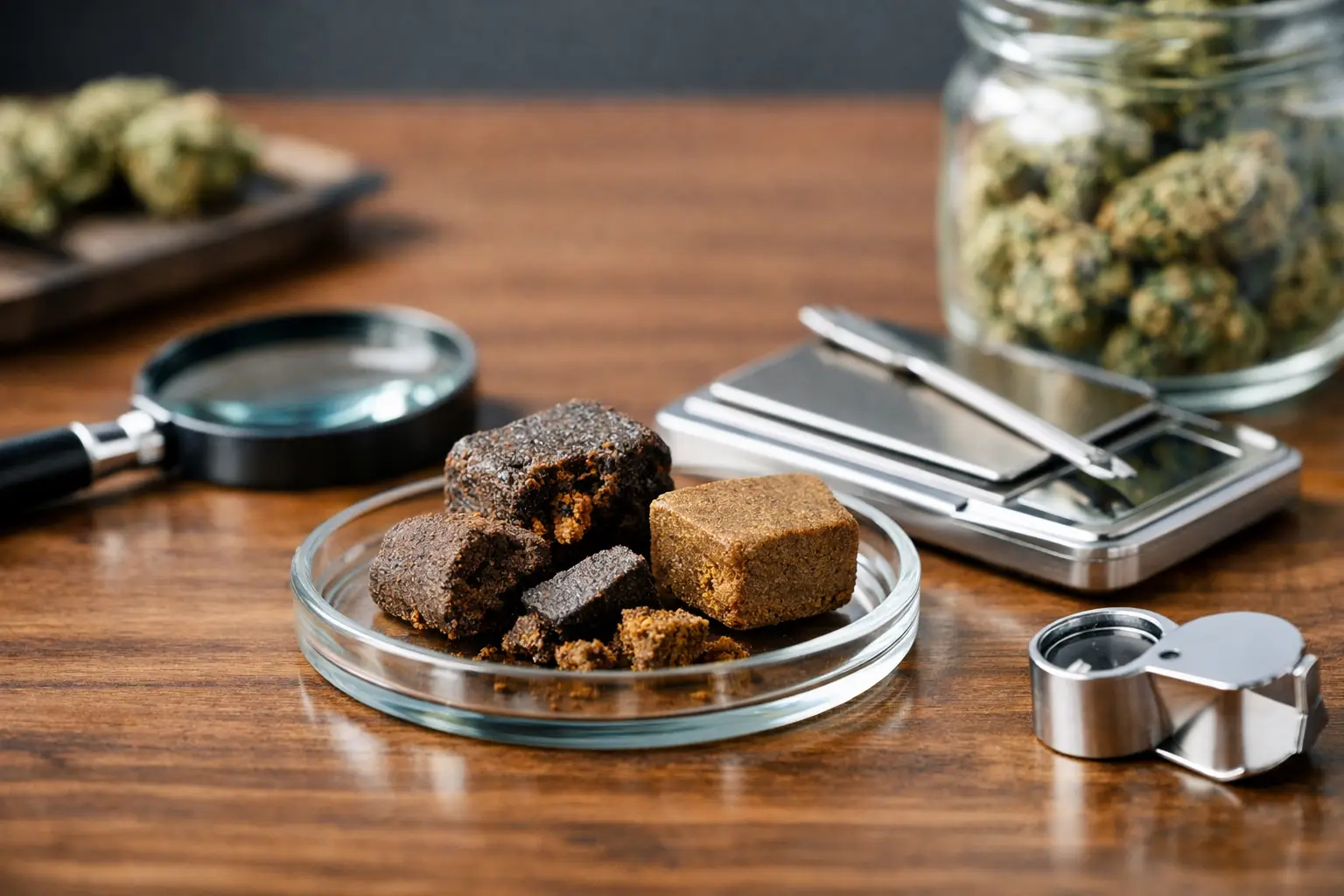
If you want to know how to identify authentic hash, start before you ever light it. Real hash tells on itself fast. The aroma, the way it breaks apart, the way it softens with warmth, and the way it burns all reveal whether you are holding premium solventless resin or a low-grade block padded with plant matter, oils, or filler.
For serious buyers, this matters for more than bragging rights. Authentic hash delivers cleaner flavor, better terpene retention, more consistent effects, and a smoother session overall. Fake or heavily cut hash might look decent at first glance, but the smoke is harsher, the taste is flat or chemical, and the experience usually falls short.
Why authentic hash stands out
Good hash is concentrated resin, not compressed mystery material. That difference shows up in every part of the experience. Authentic product carries the natural fingerprint of the cultivar and extraction style. You should notice real depth in the nose, from spicy and earthy to sweet, gassy, floral, or creamy depending on the source material.
It also behaves differently in your hands. Premium hash has life to it. Some styles are soft and oily, some are sandy and greasy, and some are dense and pliable, but they should feel intentional. Bad hash often feels dead, overly dry, suspiciously uniform, or greasy in the wrong way, like it was sprayed or mixed with something it should not contain.
How to identify authentic hash by look and feel
Visual inspection is your first filter, but it should never be your only one. A polished exterior can hide mediocre material underneath, especially in mass-market products made to imitate premium blocks.
Texture matters more than shine
Authentic hash should match its type. Dry sift and static sift can feel more sandy or crumbly at first, while semi dry and la mousse styles may feel softer and easier to work with. Premium frozen hash often looks cleaner and more refined, with a texture that reflects careful handling and full resin preservation.
What you do not want is something that feels like hard plastic, crumbles into dust with no resinous character, or leaves behind an oily residue that seems artificial. Hash should soften with body heat and become more workable. If it stays rock hard no matter what, that can be a sign of age, poor quality, or contamination.
Color can help, but it can also mislead
A lot of buyers assume darker means stronger or more traditional. That is not always true. Authentic hash can range from light blond and golden brown to deeper brown tones depending on the cultivar, curing, oxidation, and extraction method.
The better question is whether the color looks natural and consistent with the style. Extremely black exteriors with a strange pale interior can signal heavy processing or concealment. Hash that looks unnaturally glossy or dyed is another red flag. Premium product should look resin-rich, not painted.
Break it open
The inside tells a bigger story than the shell. When you split authentic hash, the interior should reveal density, resin content, and proper consistency. Some hashes break apart in soft layers, others crumble gently, and others pull slightly before separating. That variation is normal.
What is less normal is a chalky center, fibrous plant bits throughout, or a texture that looks pressed from random leftovers. If the inside appears dusty or overly leafy, you are likely not looking at top-tier hash.
The smell test is hard to fake
One of the clearest ways to learn how to identify authentic hash is by training your nose. Premium hash should smell alive. Even before heat touches it, you should get a noticeable terpene profile. Depending on the cultivar and style, that might lean sweet, peppery, skunky, woody, fruity, or deeply earthy.
Low-quality or fake product often has one of three problems. It smells like almost nothing, which usually means weak resin content or age. It smells sharply chemical, which can suggest contamination or poor handling. Or it smells flat and generic, without any real character.
Strong aroma alone is not enough, because some products are artificially scented or masked. But authentic hash tends to have layered scent, not a one-note smell. It should resemble concentrated cannabis resin, not perfume, fuel additive, or burned plastic.
Heat reveals quality fast
If you are still unsure, gentle heat will expose a lot. Good hash should respond to warmth in a natural way. It may soften, become stickier, or release more aroma. That is resin waking up, not additives melting.
Watch how it burns
When lit, authentic hash should produce rich aroma and a smooth, full smoke or vapor depending on how you consume it. The ash can vary, but clean-burning hash generally performs more evenly and leaves less harsh residue.
If it crackles aggressively, bubbles in a strange way, or gives off a sharp synthetic odor, be careful. Some bubbling can happen with resin-rich hash, but violent sizzling often points to moisture, contaminants, or adulterants. Harsh smoke that attacks the throat right away is another warning sign.
The melt test
Connoisseurs often talk about melt because it says a lot about purity. Higher-grade solventless hash tends to melt more cleanly and leave less char behind. Lower-grade product with excess plant contamination leaves darker residue and a rougher finish.
This is where expectations matter. Not every authentic hash is full-melt, and not every traditional style is supposed to disappear into a clean puddle. Dry sift, semi dry, and mousse-style hash can still be authentic and enjoyable without performing like elite six-star material. The key is whether the melt matches the grade and format being sold.
Source is part of authenticity
Even the best eye test has limits. If you are buying from random channels with no product detail, no testing standards, and no consistency, you are taking a gamble. Authenticity is not just about what the hash looks like in your palm. It is also about whether the seller can present a believable quality chain.
Reputable specialty retailers stand out because they are consistent. They describe extraction style, texture category, and expected effects in a way that makes sense. They emphasize clean production, terpene preservation, and contaminant awareness because those things affect the final product. Lab-tested claims and strong customer reviews do not guarantee perfection, but they are a much stronger signal than mystery packaging and vague hype.
If a seller claims every product is top shelf but gives you no detail on type, origin, or handling, that is not premium positioning. That is lazy marketing.
Common red flags buyers miss
The obvious red flags are fake branding, strange smell, and bad burn. But a few subtler ones catch buyers all the time.
One is over-compression. Hash that is pressed into a brick so tightly that it has no texture or movement may be old, low quality, or manipulated to look dense. Another is unnatural consistency across batches. Real solventless products vary. If everything looks identical no matter the strain or style, that can mean the product is standardized for appearance rather than quality.
Pricing can also tell a story. Premium frozen hash, static sift, and clean resin-rich formats cost more for a reason. If a seller offers every supposed top-tier style at the same bargain-basement rate, the product probably does not match the label.
How beginners can buy smarter
If you are new to concentrates, do not chase the darkest block or the strongest claim on the page. Start with trusted categories and pay attention to sensory details. Learn what proper aroma, softness, and melt look like in real life. Over time, spotting quality gets much easier.
It also helps to buy smaller amounts first when trying a new source or a new style. That is the easiest way to test consistency without committing to a large quantity. Experienced buyers do this too, especially when the product category is broad and the handling standards matter.
For shoppers looking at premium online options, stores focused specifically on hash and solventless concentrates usually give you a better shot at getting the real thing. A specialist platform like Blue Magic Patron positions around authentic, terpene-rich, lab-conscious hash for exactly that reason.
What authentic hash should actually feel like
At the end of the day, authentic hash feels honest. The smell is natural, the texture makes sense for the style, the heat response is clean, and the effects feel fuller and more refined. You are not fighting through harsh smoke or wondering what was mixed in. You are tasting resin, not filler.
That is the standard worth chasing. Once you know how to identify authentic hash, flashy claims lose their power, and quality becomes much easier to spot before you buy.

